Tuesday, May 15, 2007

National Grand Theatre


"A figurative concept, and its materialization in the design, has almost become a pre-requisite to win any large-scale project in China these days," the author continued, adding "To name a few more included in this book: Paul Andreu's National Grand Theater in Beijing has a large bubble 'heaven' hovering above the 'earth' of the theaters, which we might see as a depiction of the Chinese cosmos...; another Chinese 'cosmos' is the Shanghai Opera House (1994-1998) by Arte Charpentier et AssociƩs, which has a curved top and cubic square fbdy...;' the Beijing International airport (under construction) by Foster and Partners, albeit sleek and high-tech, is (according to the architects) a flying 'dragon"....; and the Jimnao Tower (1997-1999) in Shanghai by SOM is a Chinese pagoda, so the architects argue, thought it is clad with intricate metal frames and shining glass....Other figurative motifs are not overtly Chinese, but they do appear to have won the hearts of the Chinese: Zaha Hadid's Guangzhou Opera House (under construction) (see an illustration of it in The City Review article on an Hadid exhibition at the Solomon R. Guggenheim Museum in New York) is comprised of 'pebble stones' washed smooth by the city's Pearl River..., and the Shanghai Pudong International Airport (1999) by Paul Andreu is a 'seagull' ready to spread its wings. Beijings's Olympic National Stadium (under construction) by Herzog and de Meuron, perhaps the most glamorous project so far conceived, is a gigantic 'bird's nest'; and the 'Watercube' National Swimming Center, designed by PTW, China State Construction Engineering Corporation and Arup....is a transparent crystal cell structure, although the architects have tried to argue the the square plan is Chinese."


Here's part of the author's commentary on the French architect's design:

"The theater is located immediately to the west of the Great Hall of the People on Changan Avenue, the symbolic spine of Beijing running from east to west across the city's south-north imperial axis of Tiananmen Square and the formal imperial palace of the Forbidden City. The design comprises a gigantic glass sphere hovering above the water in a large pond, and this sphere has an east-to-west span of 213 meters, with a 144-meter north-to-south span, and the height is 46 meters, which is exactly the same height as the Great Hall of the People. No doubt the arhitect would have used this to counter criticism that his futurist 'blob' does not fit the neo-Classical context, but this, more than anything, is where opinion is dividided. A feature of the design is its entry tunnel under the artificial lake, as the complex is sunken below ground level. This tunnel, according to the architect, allows preparation with space and time for entering the theater. The curved earthy-red masonry wall - the only reminder of the Forbidden City across the road - naturally leads to the underwater tunnel. Surely it will be a fascinating experience to go through the glazed tunnel as if a fish swmming in the lake, which, in my frivolous imagination, would serve as a purifying ritual for people entering from a delirious consumer's world to acquire some culture. No so frivolous is a figurative nickname for the titanium-clad sphere from the Chinese: the 'eggshell.'....Three separate buildings, the central opera house, the concert hall and the theater - are covered by the 'eggshell,' and the space between the shell and these buildings naturally becomes the concourse....Although an egg has a universal symbolic connotation of fertility (and it is no exception for the Chinese), Wolfram Eberhard reminds us that one school of antique Chinese astronomy actually believes that the cosmos is egg-shapped."

Planetariums


More on the systems here

Terraces and Circles - Club as Theatre


Quantum Physics and Tao

The name Quantum Tao was chosen as it combines two terms that represents two ideas that are both mordern and ancient. Taoism, as a philosophical idea, dates back to ancient China, but the ideas inherent in Taoism are as relevant now as they were when Lao Tzu first described them. Quantum mechanics has seems a very modern idea, but the modern understanding actually dates back the ancient Greeks, who first propsed that matter was really just a form of energy and that both were in fact the same. However Quantum Mechanics really gained momentum, as an idea, at the turn of the last century and has, sinse its inception, thrown into doubt everything that we 'thought' we knew about what reality really is....

"A careful analysis of the process of observation in atomic physics has shown that the subatomic particles have no meaning as isolated entities, but can only be understood as interconnections between the preparation of an experiment and the subsequent measurement. Quantum theory thus reveals a basic oneness of the universe. It shows that we cannot decompose the world into independently existing smallest units. As we penetrate into matter, nature does not show us any isolated ‘basic building blocks’, but rather appears as a complicated web of relations between the various parts of the whole."

'On Quantum Theory'
The Tao of Physics - Fritjof Capra

More here

Tuesday, May 8, 2007

Yin and Yang Theory

Circle of the Universe

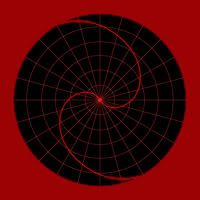
In general, the Yin Yang symbol is a Chinese representation of the entire celestial phenomenon. It contains the cycle of Sun, four seasons, 24 Segment Chi, the foundation of the I-Ching, and the Chinese calendar.

Yin/Yang theory is a very dynamic system of thought that reflects the ancient view that the Universe is constantly changing, flowing, transforming and part of an ongoing process, rather than a linear set of static shapes and forms. Critical to the understanding of the ebb and flow of Yin & Yang is the understanding of Qi as the subtle energy present in all things and what animates, moves and gives life to all things in Nature. The ancients developed these systems by observing the ebb and flow and the cycles of Nature.

Yin & Yang are seen as mutually dependent opposites; the essential duality of the Universe. Yin transforms into Yang as Night transforms into Day, as the cold of Winter transforms into the heat of Summer.

Yin is the 'dark side of the mountain, cool, passive, still. Yang is the 'bright side of the mountain, warm, active, open. Yin is the Feminine principal. Yang is the Masculine principal.

The five basic characteristics of Yin & Yang are
1.) that they are opposite to each other,
2.) that neither can exist without the other (interdependent),
3.) that each is constantly consuming the other (interconsuming),
4.) that they are in a constant state of transforming into each other (intertransforming) and
5.) that because each contains the other within it, each can be divided infinitely

In Chinese Medicine, an understanding of Yin & Yang is vital. If a condition is Yin in nature, that is understood to be a deficiency of some sort. If a condition is Yang in nature, that is understood to be an excess of some sort. Given the ebb and flow of Qi, a Yin condition can, and probably should become Yang in nature as the patient recovers. At the same time, a Yang condition, such as a Cold or the Flu, can and often does become Yin as the body is depleted. Needless to say there are numerous permutations of Yin & Yang in TCM diagnosis. Both are usually present and it is their dynamic interaction that is the basis for diagnosing and treating any disharmony.

Concepts of Yin & Yang permeate Oriental thinking at all levels. Spring and Summer are seen as the Yang times of the year. Time for rebirth, renewal, growth and activity. Autumn and Winter are seen as the Yin times of the year. Time for the earth to go to sleep. It is a time for introspection and meditation.

Each day is divided into Yang & Yin. The morning is seen as the Yang time of the day, while the afternoon is the Yin part of the day. The true Yin part of the 24 hour cycle is the night. The first part of the night is referred to as the Yang within Yin part, while closer to morning is referred to as the Yin within Yin part. The hour or two before dawn is the lowest ebb of the body. Dawn is considered the Yang within Yang part of the day, while the afternoon is the Yin within Yang, and so on.

Looking at the world in terms of Yin and Yang gives one a real sense of how dynamic and ever-changing is the Universe. No matter how you are feeling today, it will change. The ancients say one never steps into the same river twice; One never awakens to the same day twice.

Saturday, May 5, 2007

Sacred Geometry


In nature, we find patterns, designs and structures from the most minuscule particles, to expressions of life discernible by human eyes, to the greater cosmos. These inevitably follow geometrical archetypes, which reveal to us the nature of each form and its vibrational resonances. They are also symbolic of the underlying metaphysical principle of the inseparable relationship of the part to the whole. It is this principle of oneness underlying all geometry that permeates the architecture of all form in its myriad diversity. This principle of interconnectedness, inseparability and union provides us with a continuous reminder of our relationship to the whole, a blueprint for the mind to the sacred foundation of all things created.

Feng Shui


Feng Shui meaning literally "wind water" is a Chinese philosophy about the relationship between humans and their environment. It is about how everything is connected and affects your well-being. Based on the laws of nature, its theories offer us a way of understanding why certain things occur and how to create a comfortable environment that lets us live and work efficiently and progressively.


Feng Shui is the Ancient Chinese art of organizing space. It arises out of the Tao of Mastery, one of the 8 Pillars of Taoist practice. Included in the Tao of Mastery, are Chinese Astrology, Numerology, and Symbology which are similar to their Western counterparts and allow the student to gain insights into his/her own nature and relationship to his/her surroundings.

As well, Feng Shui draws on the I Ching, which is the basis for the Tao of Success, another of the 8 Pillars of the Tao.

As you can see from the above quote, what is important, is not the actual arrangement of physical objects, but the space created by the arrangement of those objects. It is in this space that the Qi flows.

The heart of Feng Shui practice is not just to arrange space, but to arrange your personal space in a manner that harmonizes your personal nature with Natural Laws. So it is important, whether you call on a Feng Shui Master, or are interested as a casual student, that you know yourself, and know what you want to accomplish.

For best results you need to be specific.

Feng Shui, as all Chinese esoteric practices, uses Qi Theory, Yin Yang Theory, and 5 Elements Theory, to diagnose and design treatments ( or 'cures' as they are called).

There are two basic schools of Feng Shui, The Compass School and the Form School.

Compass School theories are derived from a rather complex set of calculations based on the movement of the planets and stars (Astrology), numerology and other factors. A Feng Shui practitioner is often called a Geomancer.


A Geomancer's compass, called a Loupan, was developed to help with these calculations. This is a rather complex approach requiring many years of study to master and not recommended for the casual student.

The Compass school begins with calculating your personal Kua Number.


The 30 Spokes unite in the one nave but it is on the empty space that the use of the wheel depends. Clay is fashioned into vessels, but it is on their hollowness that their use depends. The doors and windows are cut out of walls to form an apartment but it is on the empty space that their use depends. Therefore, what has a physical existence serves only for useful adaptation.

Chapter 11 - Tao Te Ching

Feng Shui is the Ancient Chinese art of organizing space. It arises out of the Tao of Mastery, one of the 8 Pillars of Taoist practice. Included in the Tao of Mastery, are Chinese Astrology, Numerology, and Symbology which are similar to their Western counterparts and allow the student to gain insights into his/her own nature and relationship to his/her surroundings.

As well, Feng Shui draws on the I Ching, which is the basis for the Tao of Success, another of the 8 Pillars of the Tao.

As you can see from the above quote, what is important, is not the actual arrangement of physical objects, but the space created by the arrangement of those objects. It is in this space that the Qi flows.

The heart of Feng Shui practice is not just to arrange space, but to arrange your personal space in a manner that harmonizes your personal nature with Natural Laws. So it is important, whether you call on a Feng Shui Master, or are interested as a casual student, that you know yourself, and know what you want to accomplish.

For best results you need to be specific.

Feng Shui, as all Chinese esoteric practices, uses Qi Theory, Yin Yang Theory, and 5 Elements Theory, to diagnose and design treatments ( or 'cures' as they are called).

There are two basic schools of Feng Shui, The Compass School and the Form School.

Compass School theories are derived from a rather complex set of calculations based on the movement of the planets and stars (Astrology), numerology and other factors. A Feng Shui practitioner is often called a Geomancer.

A Geomancer's compass, called a Loupan, was developed to help with these calculations. This is a rather complex approach requiring many years of study to master and not recommended for the casual student.

The Compass school begins with calculating your personal Kua Number.

See below.

Loupan

A Geomancer's Compass (Loupan)


A more modern approach is the Form School. This school is somewhat easier and one that the casual student with a little practice can make use of. Feng Shui is still powerful medicine though, and should be approached with a clear perspective and conscious intent.

A careless approach is as likely to result in chaos as it is to result in positive changes.

In this school, it is still recommended to hire a qualified practitioner for important things like building a home or establishing a business.

For the Taoist, change is the one constant in the Universe. Concepts of good and bad are foreign to the practice. According to the theory of Yin/Yang, opposing forces are constantly flowing and transforming into each other.

As surely as night follows day and summer follows winter the flow of Nature is a cyclical one.

This is a fundamental Law of Nature.

The point of conscious change is to bring the student more into alignment with Natural Laws. The more the student conforms to Natural Laws, the more he/she will experience success, good luck, prosperity, good health, and mastery over his/her own life and surroundings.

Feng Shui is the specific practice that concerns itself with one's environment.


Determining Your Kua Number

In the Compass school it is important to know your Kua Number. With your Kua Number you can determine the most auspicious direction for your front door, your bedroom or the bed within, as well as the placement of the various rooms and people in the home.

Below is a directional chart showing the associated Kua Number. For example, if your Kua Number is 4, then it is most auspicious to locate your front door facing this direction, if you are the owner of the house. If you are a resident, this might be the best place to locate your bedroom, or workroom.

While the table below looks very much like the Ba Gua, It is not. A sophisticated Compass analysis will have each quadrant subdivided into several sections, each with qualities of its own, so that one room may have a number of different 'energies' flowing through it.

Still there is no rule that says you can't mix the schools, especially if you are building or renovating.


Calculating your Kua Number

Female;

Year of birth ... eg. 1953
Reduce the last two digits to a single number.. eg 5 + 3 = 8
Add 5 to this number .. eg 8 + 5 + 13
Reduce this number to a single digit .. eg. 1 + 3 + 4

4 is your Kua Number

Remember to always reduce double digits to a single number

Male;

Year of birth .. eg. 1963
reduce the last two digits to a single number .. eg. 6 + 3 + 9
Subtract the resulting number from 10 .. eg. 10 - 9 + 1
Your Kua number is 1

Remember to always reduce double digits to a single number.

Chinese Landscape Painting


Old Trees, Level Distance, Northern Song dynasty (960–1127)
Guo Xi (Chinese, ca. 1000–ca. 1090)

Images of nature have remained a potent source of inspiration for artists down to the present day. While the Chinese landscape has been transformed by millennia of human occupation, Chinese artistic expression has also been deeply imprinted with images of the natural world. Viewing Chinese landscape paintings, it is clear that Chinese depictions of nature are seldom mere representations of the external world. Rather, they are expressions of the mind and heart of the individual artists—cultivated landscapes that embody the culture and cultivation of their masters.

History Here

Modern Application

3D Graphics / Computer Generated Landscapes

Video games such as Myst and computer design programs such as Bryce brought emotive landscapes to modern digital culture.


High Resolution Digital Photography


high resolution camera's now capture wide, detailed images


large scale videos would be projected in emotive places

Chinese Modern Art


By Pallavi Aiyar

BEIJING - "The first time I sold my contemporary art collection was around three years ago, and I tripled my investment. If I had waited until today, the same works would have gone for 10 times what I sold them for," rued Robert Bernell, a Beijing-based art publisher and collector.

Indeed, as China's booming economy rolls ever onward, contemporary Chinese art has become the latest "next big thing" in the international art market, sending galleries, collectors and investors alike into a rapturous tizzy.

At Sotheby's first New York auction of contemporary Asian art, held 2 years ago, Chinese figurative painter Zhang Xiaogang's Bloodline Series: Comrade No 120 (see below) sold for US$979,200, more than twice the auction house's high estimate of $350,000.

"I wasn't surprised at all. In fact I had bet money that this auction would see a contemporary Chinese painting reach $1 million. I narrowly lost the bet, but there is no question in my mind that it will happen at the very next auction," said Ludovic Bois, founder of Chinese Contemporary, a leading gallery of Chinese art in London and Beijing.

After years of being forced to operate underground, pariahs at home and ignored by the outside world, artists in China are fast transforming from near-starving outcasts to priority guests on celebrity party lists. The flea-ridden, dingy artist communities of the 1990s have metamorphosed into ueber-chic neighborhoods, offering cappuccino breaks for weary art-mongers.

Both Bernell's bookstore and Bois's art gallery are in the 798 Space art complex, in the Dashanzi Art District of east Beijing. Until a few years ago the area was notable only for its hulking, semi-defunct electronic-components and military-equipment factories. Designed by architects from East Germany in the 1950s, the factories' Bauhaus architecture proved to be the perfect environment for a new art community with a fashionably edgy feel, and in the past three years Dashanzi has emerged as the center of Beijing's art scene.

"What Montmartre was to Paris and SoHo to New York, 798 is to Beijing," said Bois, perhaps a tad bit hyperbolically.

The complex is home today to more than 30 galleries, cafes, boutiques and bookstores. New York's Long March Foundation and the Tokyo Gallery of Japan both have spaces here. According to Bernell, the Guggenheim and Pompidou Center are also currently looking to establish a presence at the complex. Initially slated for demolition, Dashanzi has now been given a stamp of approval by the municipal authorities, who want to showcase the neighborhood during the Summer Olympics in 2008.

This month, the high-profile third Dashanzi International Art Festival will kick off, a three-week extravaganza featuring 100 Chinese and 50 foreign artists. The organizers are expecting 150,000 people to attend. This month will also see more than 90 art galleries from around the world converge in the Chinese capital for the third China International Gallery Exposition (also known as the Beijing Art Fair).

"It's a heady feeling," said Bois. "Museums around the world are buying [contemporary Chinese art], Chinese collectors have begun to get seriously interested and even funds are being created to buy it. This is Chinese art's moment."

In the 1990s, little was known about contemporary Chinese art. Most local artists at the time belonged to what are called the pop-art or cynical-realism schools. Both involved an overt political critique. Wang Guangyi's Great Criticism series, for example, slapped brand logos on socialist propaganda images. At the time, police routinely closed down exhibitions, and denunciations of specific artists by the authorities were common.

A few visionary curators did organize shows abroad: the Oxford Museum of Modern Art in 1993 and PSI New York in 1998 are examples. In 1999, the inclusion of 21 Chinese artists at the Venice Biennale was a breakthrough, followed by a successful photography exhibition called Inside Out that traveled across the United States.

Bois recounts how a few canny international collectors began to buy into Chinese art early, when the market was still brand-new to most investors. Kent and Vicki Logan were the first noteworthy collectors in the US, acquiring close to 200 works.

But the most famous collector of Chinese contemporary art is Swiss national Uli Sigg, who owns close to 2,000 works. Last year, ArtReview magazine ranked Sigg 72nd on its list of the most important personalities in the art world. Bois predicts that as Chinese art reaches its full value, Sigg has a good chance of making it to the No 1 spot.

Aside from its popularity in the West, Chinese art is now also beginning to be aggressively collected by the Chinese themselves.

"In the 1990s, contemporary art was seen as too risky, and most domestic collectors preferred to go for antiques," recalled Boriana Song, manager of the Chinese-owned Beijing Art Now Gallery. "But now Chinese buyers are hungry for culture, and they see contemporary art as fashionable. The market is maturing, tastes are changing, and more than 60% of our clients are local Chinese."

Moreover, as Bernell explained, the routine oppression of artists by the authorities, common in the 1990s, is over. In fact today the government seems to be consciously trying to find ways to use contemporary art to bolster its image abroad, resulting in its active involvement in sponsoring large-scale exhibitions.

"Satirizing Mao [Zedong]'s image still remains taboo," said Bois, "but violence, sex and nudity, which used to come in for flak, are pretty much accepted today."

Supporting this renaissance in Chinese art are museums, hundreds of which are being renovated and built across the country. The nationwide goal is to add 1,000 new museums by 2015. In the capital, plans are afoot to start up a privately run Beijing Museum of Contemporary Art.

Bois also points to the important work of young and dynamic curators intent on making sure that Chinese art is exhibited and promoted by Chinese people and institutions. "While the bulk of Chinese art collectors are still Westerners, slowly tastes and trends are starting to be dictated by Chinese themselves," he said.

The cumulative result of all this activity has meant that the market for contemporary art is zooming ever upward. Works by leading artists such as Zhang Xiaogang and Wang Guangyi used to go for as little as $1,000 in the early 1990s. By 1996 their price had risen to about $10,000. Today, their works routinely fetch $100,000-$200,000.

Despite fears that the contemporary art market may be overheated, Bois - who spent 15 years as an investment banker in London prior to his artsy avatar - remains bullish. "I think it's still an 'emerging market' worth investing in. It's still undervalued, and upcoming artists can multiply in value by as much [as] 30 [times], and more established ones can go up at least 10 times."

Beijing Art Now's Song is more cautious. "Prices seem to be going up too high, too quickly. I think they will actually continue to rise for a few more years. But [the contemporary art market] can be dangerous - as dangerous as speculating in real estate," she smiled.

Tadao Ando, The Water Temple

Tadao Ando is that rare architect who combines artistic and intellectual sensitivity in a single individual capable of producing buildings, large and small, that both serve and inspire. His powerful inner vision, ignores whatever movements, schools or styles that might be current, creating buildings with form and composition related to the kind of life that will be lived there.

* Morimoto restaurant in the Chelsea Market, his first project in Manhattan, opened January 2006.

In progress

* House, stable, and mausoleum for former fashion designer Tom Ford , near Santa Fe, New Mexico
* New Tokyo Tower [10] - to be the world's tallest structure upon completion.

His Water Temple is a stunning use of water and sacred geometry.


Water Temple Link


Minimalism in Design


The term minimalism is also used to describe a trend in design and architecture where in the subject is reduced to its necessary elements. Minimalist design has been highly influenced by Japanese traditional design and architecture. In addition, the work De Stijl artists is a big source of reference this kind of work. De Stijl expanded the ideas that could be expressed by using basic elements such as lines and planes organized in very particular manners.

Architect Ludwig Mies van der Rohe adopted the motto "Less is more" to describe his aesthetic tactics of flattening and emphasizing the building's frame, eliminating interior walls and adopting an open plan, and reducing the structure to a strong, transparent, elegant skin. Designer Buckminster Fuller adopted a similar saying, "Doing more with less", but his concerns were oriented towards technology and engineering rather than aesthetics. The other modern master people still observe to study reductivist ideas is Luis Barragan. In minimalism, the architectural designers pay special attention to the connection between perfect planes, elegant lighting, and careful consideration of the void spaces left over after the removal of three dimensional shapes from an architectural design.

Contemporary architects working in this tradition include John Pawson, Eduardo Souto de Moura, Alvaro Siza, Tadao Ando, Alberto Campo Baeza,Yoshio Taniguchi, Peter Zumthor, Vincent Van Duysen, Claudio Silvestrin, Michael Gabellini, and Richard Gluckman.

Water in Interior Design


Water and Interior Design

Water is used to activate or slow down Chi in a room, being highly beneficial for health, wealth and relationships. Indoor fountains copy the natural flow of water in a harmonious way creating the energy of Chi.


Common practive is to place a tabletop fountain in your home or office is the easiest way to add Chi into you life and will significantly enhance the desires you are working for. They can have an amazing effect on your wealth, romance and general well-being. To enhance your wealth and prosperity, position your indoor water feature in the southeast element of your home or office. For career luck, place in the north.


Fountains also add the relaxing sound of a babbling brook to your environment and are recommended for homes that have central heating, as they increase the humidity level which in turn decreases dust, pollutants and static electricity. Flowing or moving water also increases negative ions in the air. Excessive amounts of positive ions (which are created by pollution and other factors) can result in sickness and depression. Water Fountains can help by balancing the negative and positive ions in the air.

Water Screens


The latest in video projections - projected onto water. Indoor or outdoor use.

More info and a nice video here

James Turrell

ames Turrell (born 1943, Los Angeles) is an artist primarily concerned with light and space. He is best known for his work in progress, Roden Crater. Located outside Flagstaff, Arizona, Turrell is turning this natural cinder volcanic crater into a massive naked-eye observatory, designed specifically for the viewing of celestial phenomena. His other works usually enclose the viewer in order to control their perception of light; a James Turrell skyspace is an enclosed room large enough for roughly 15 people. Inside, the viewers sit on benches along the edge to view the sky through an opening in the roof. He is also known for his light tunnels and light projections that create shapes that seem to have mass and weight, though they are created with only light.

A James Turrell skyspace is a freestanding enclosed chamber large enough for about 15 people and designed and constructed with utmost precision to heighten our sense of sight and perception.

The Henry Art Gallery Skyspace is the very first to combine two aspects of James Turrell's work: skyspace and exterior architectural illumination, making it accessible to viewers from both the inside and the outside. From the outside, the elliptical chamber becomes a luminous light work as the eighteen foot-high glass panels covering its exterior are softly illuminated from within with slowly changing color.

Inside the skyspace, visitors sit on a bench and view the sky and atmospheric changes through an opening in the roof. On rainy days a moveable dome covers the opening and a secondary light source creates a seemingly infinite visual space beyond the roof “aperture.”